

Ramp Calculator - Easy Ramp Slope & Length Guide for Wheelchairs
A ramp calculator helps you find the correct ramp length and slope so that wheelchairs, seniors, and walkers can move safely between different heights. Using a ramp slope ratio calculator or wheelchair ramp slope calculator removes guesswork and ensures the ramp is comfortable, safe, and compliant with accessibility guidelines.
What Is a Ramp & Why Is a Ramp Calculator Important?
A ramp is a gently sloping surface that replaces steps. It allows easy movement for:
- ? Wheelchair users (manual and powered)
- ?? Seniors and people using walkers
- ????? Caregiver-assisted mobility
- ?? Trolleys and equipment
If a ramp is too steep, it can be dangerous. If it is too long, it may waste space and cost more. That is why a ramp slope calculator is important. It helps you choose the correct ramp slope ratio so the ramp is safe, usable, and comfortable.
How to Use the Ramp Calculator (Step-by-Step)
- Enter the Step Height (Rise): Input the vertical height you need to cover. Choose inches, centimeters, millimeters, feet, or meters.
- Select the Ramp User Type: Each user type applies a recommended slope ratio.
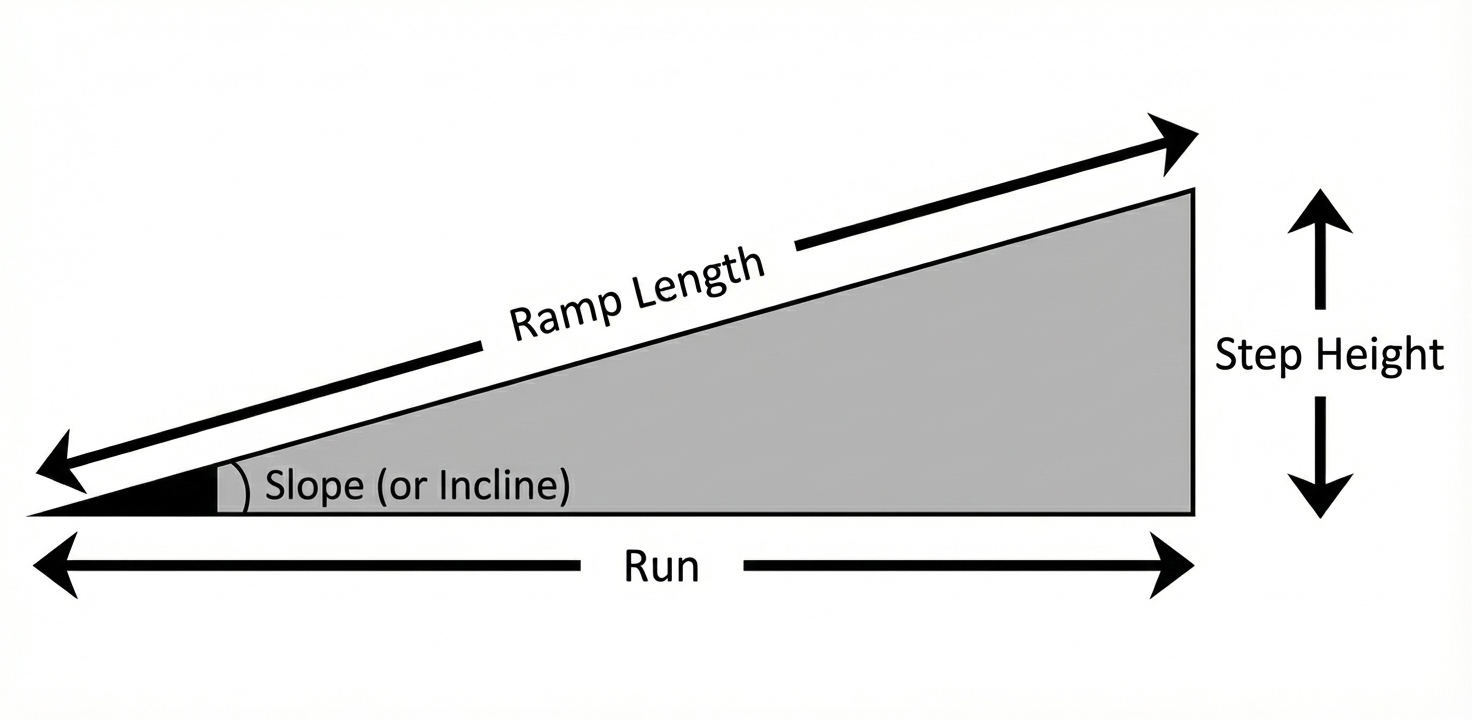
- Click Calculate: Instantly see the required ramp length, ramp slope angle (?), and used slope ratio.
This makes it easy to understand how to calculate ramp slope without manual math.
Ramp Length Formula & Slope Ratio Explained
The ramp length calculator uses a simple formula: Ramp Length (Run) = Step Height (Rise) � Slope Ratio
Example: If the step height is 6 inches and the slope ratio is 1:12 ? Ramp length = 6 � 12 = 72 inches (6 ft). This is how a slope calculator for ramp works behind the scenes.
What Is a Slope Ratio?
The slope ratio is written as 1:X
- "1" = vertical rise
- "X" = horizontal run
A larger ratio means a gentler and safer ramp.
Ramp Slope Ratios Explained for Different Users
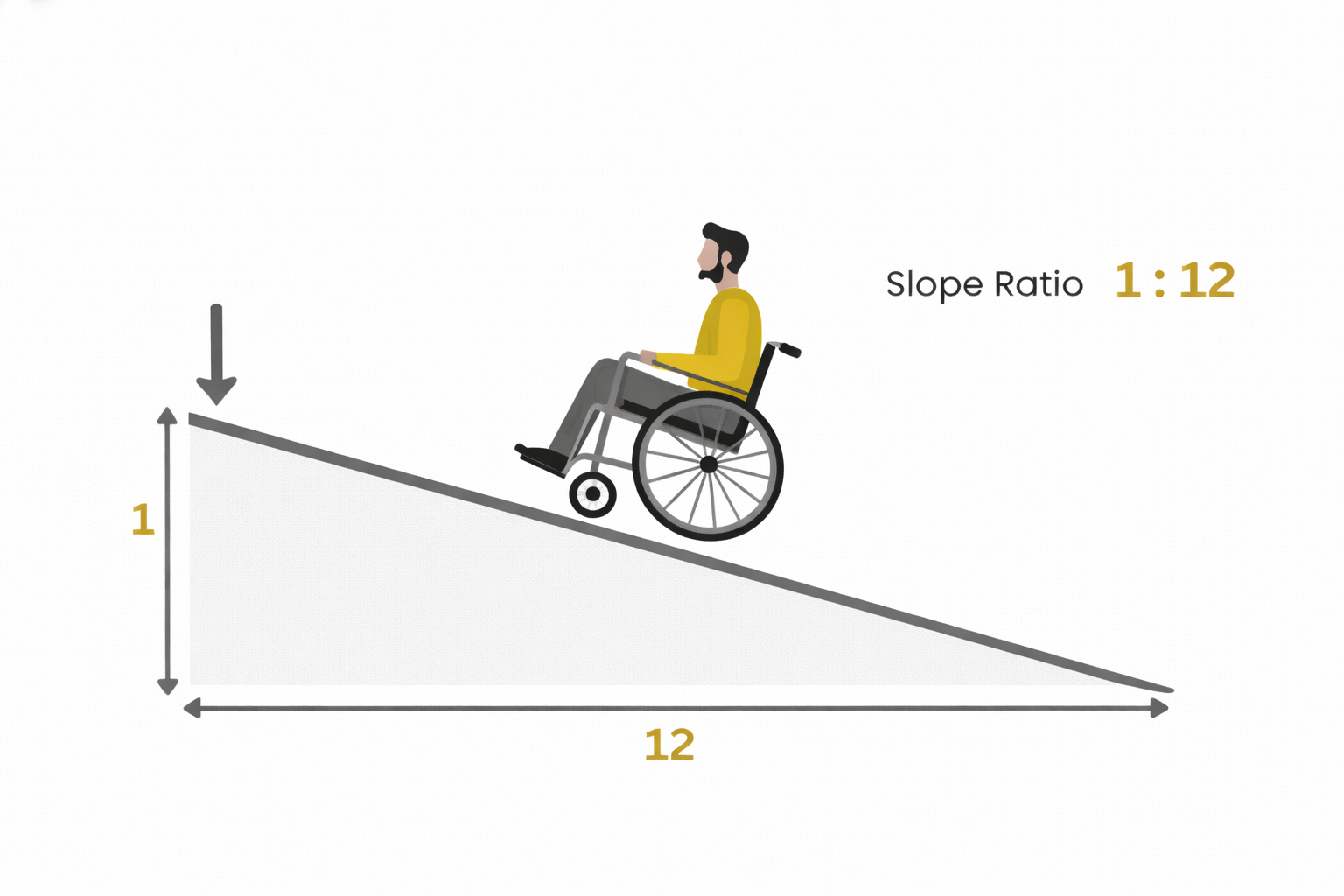
- 1:12 - Manual Wheelchair: Most common and safest standard; used in ADA and CPWD guidelines.
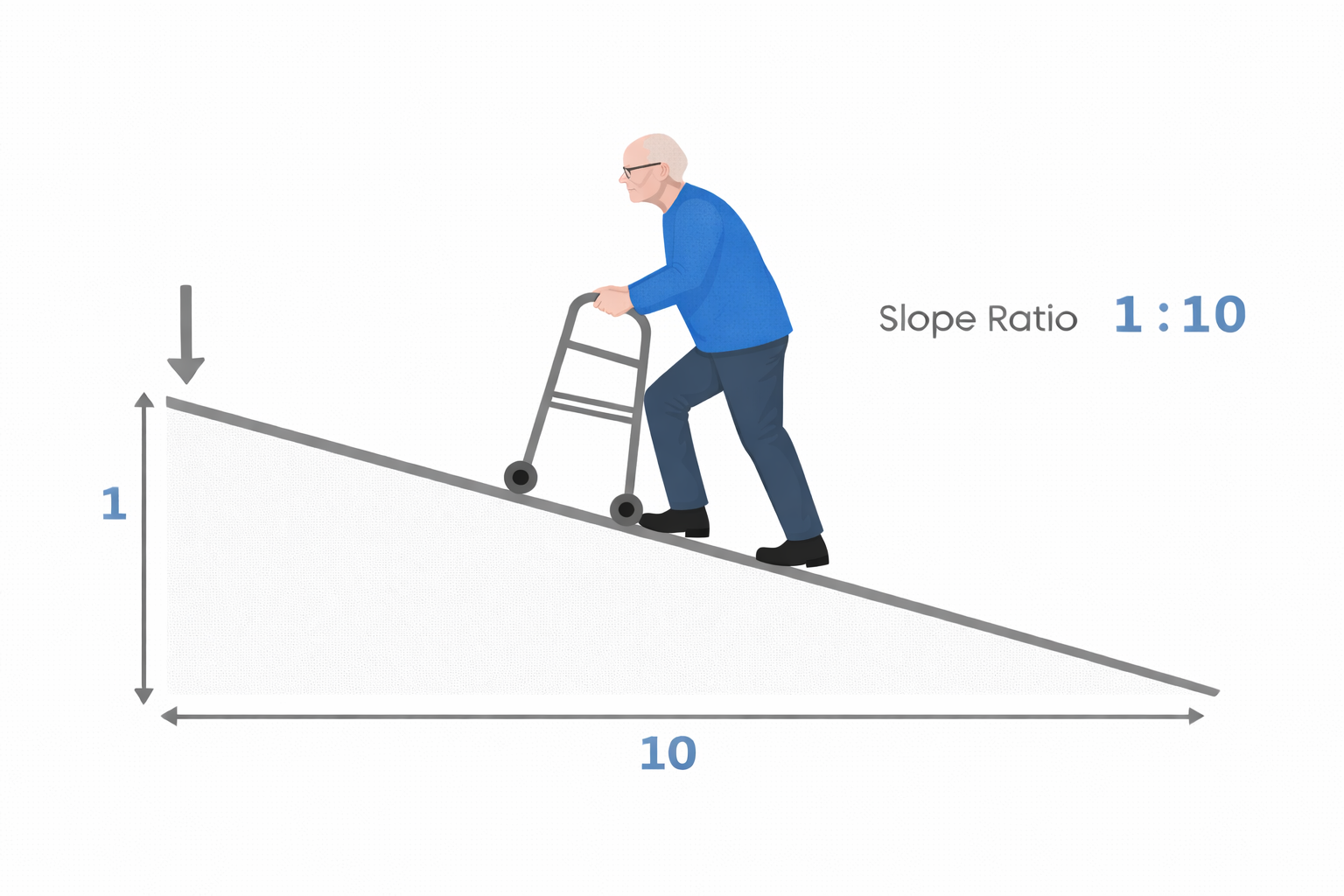
- 1:10 - Elderly / Walker: Slightly steeper but suitable for short heights.
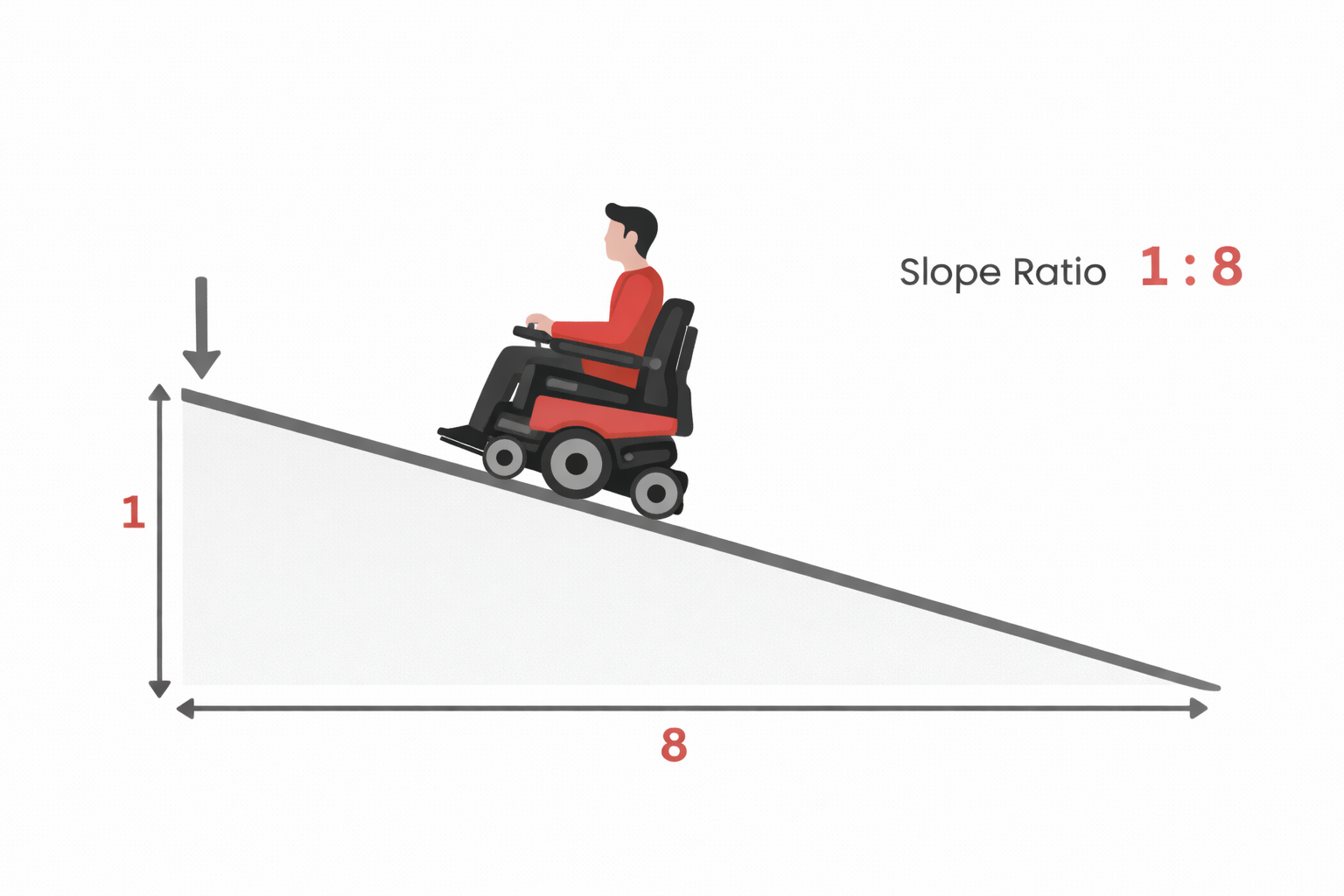
- 1:8 - Powered Wheelchair: Acceptable for powered chairs with good control.
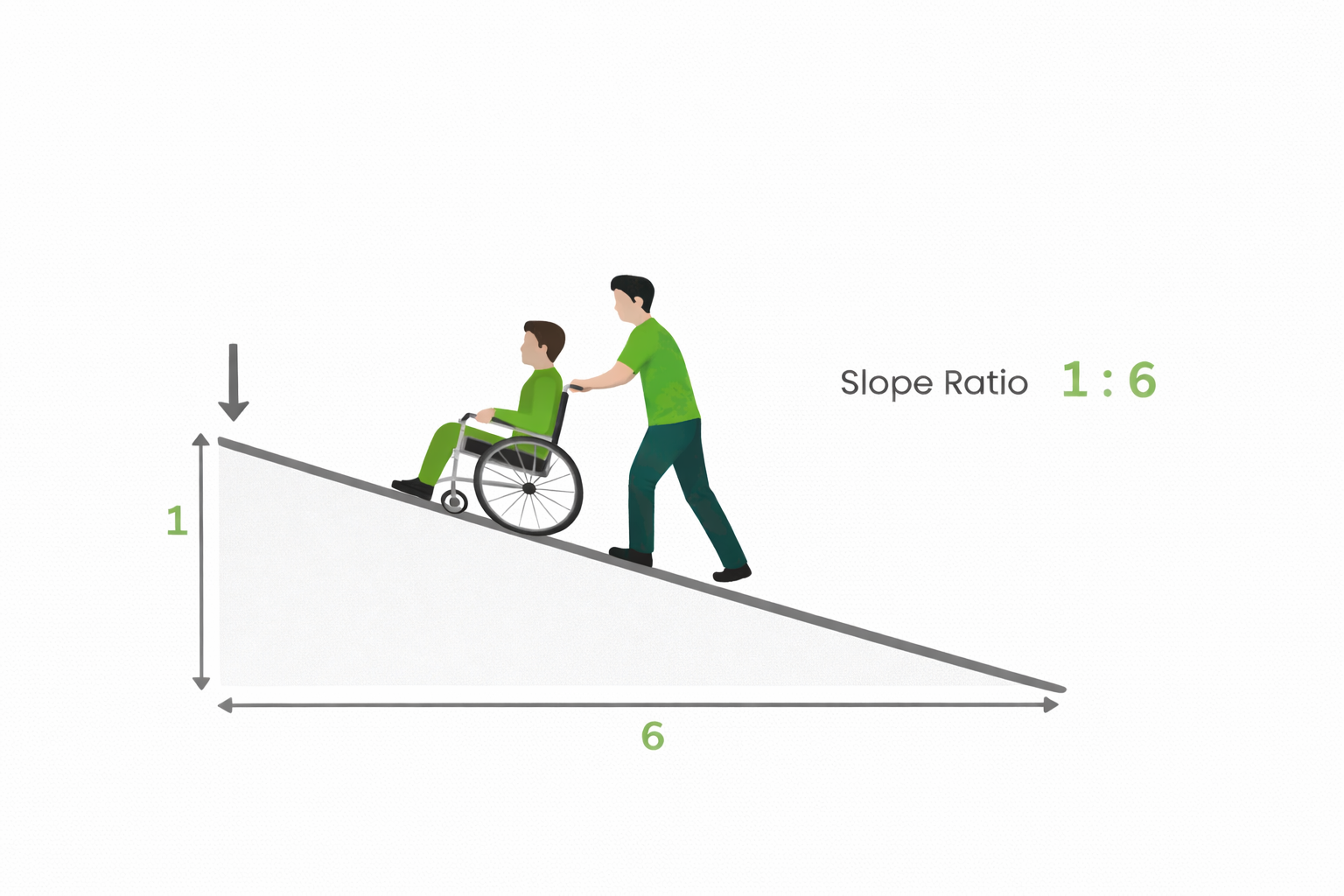
- 1:6 - Caregiver Assisted: Only for very short rises with help.
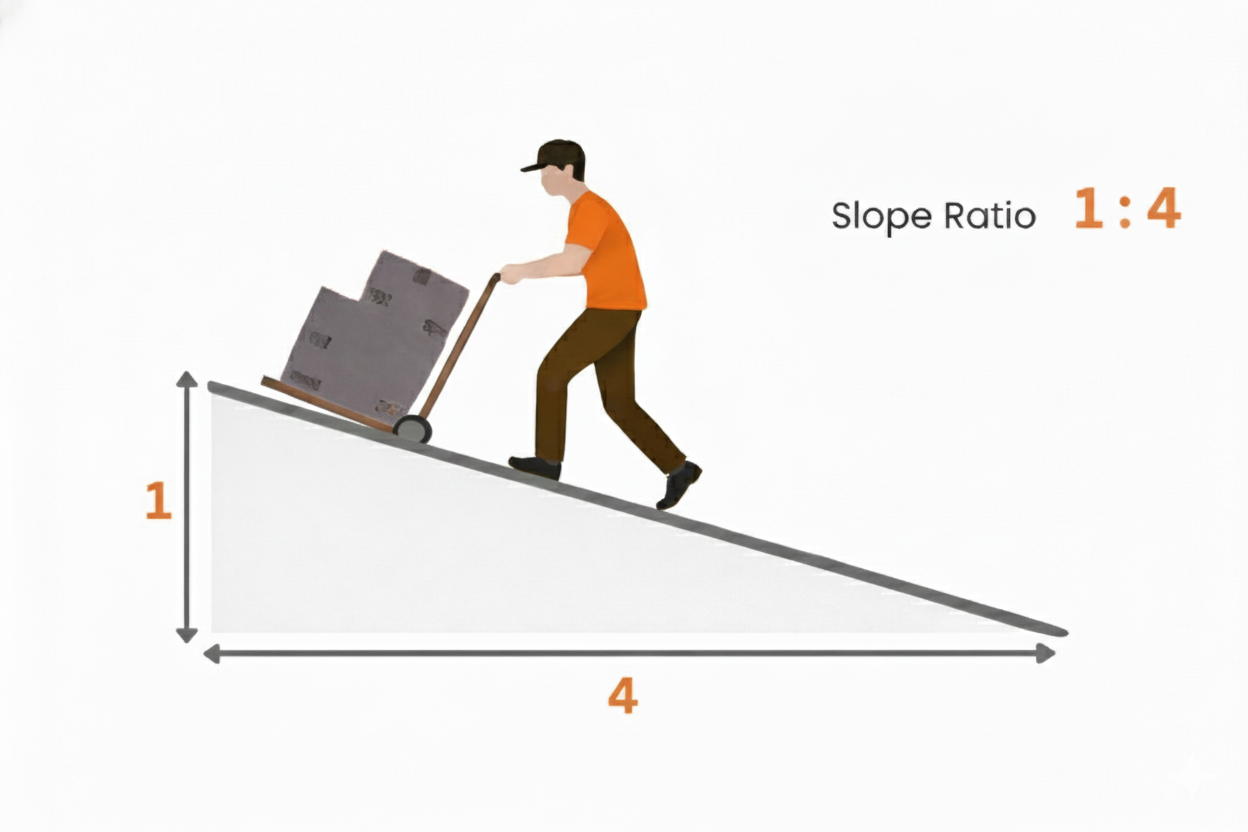
- 1:4 - Trolley or Vehicle Ramp: Not suitable for wheelchairs; used for goods movement.
A ramp ratio calculator helps you pick the right option instantly.
Ramp Slope Angle (?) Calculation
The wheelchair ramp slope calculator also shows the slope angle in degrees. The angle is calculated using: Angle = arctangent (rise � run)
Lower angles mean easier pushing, less effort, and better safety. For most wheelchair ramps, angles under 5� are considered comfortable.
Accessibility Standards for Ramp Slopes
- ADA (USA): 1:12 slope, with rest landings for long ramps.
- CPWD (India): 1:12 preferred, 1:10 sometimes used where space is limited.
- WHO Guidelines: Gentle slopes recommended for universal access.
- UK Standards: Typically 1:12, with rest landings for public buildings.
Using a ramp slope ratio calculator helps you meet these standards easily.
Safety Tips When Designing a Ramp
- Use non-slip surfaces.
- Add side kerbs or edge protection.
- Install handrails where possible.
- Keep ramps dry and obstacle-free.
- Check product limits - portable ramps are usually safest below 6 ft.
Conclusion
A properly designed ramp makes everyday movement safer and more independent. By using this ramp calculator, you can accurately calculate ramp length, choose the correct ramp slope ratio, understand ramp slope angle, and select the right ramp product confidently.