
A ramp calculator is the fastest way to find the correct ramp length and slope for wheelchairs, seniors, walkers, and vehicles. Whether you need a wheelchair ramp slope calculator, a car ramp slope calculator, or a general ramp slope calculator for home access, this guide walks you through everything — including the ramp calculation formula, how to read a slope ratio, and exactly how to calculate ramp slope and how to calculate ramp length without manual math.
What Is a Ramp & Why Use a Ramp Calculator?
A ramp is a gently sloping surface that replaces steps, allowing safe and comfortable movement for:
- Manual and powered wheelchair users
- Seniors and people using walkers
- Caregiver-assisted mobility
- Trolleys, equipment, and vehicles
If the slope is too steep, the ramp becomes dangerous. Too shallow and it wastes space and budget. A ramp slope calculator removes the guesswork — it uses your step height (rise) and the recommended slope ratio to instantly tell you the ramp length you need.
How to Use the Ramp Calculator (Step-by-Step)
- Enter the Step Height (Rise): Input the vertical height you need to cover. Choose from inches, centimeters, millimeters, feet, or meters.
- Select Your Ramp User Type: Each user type applies a recommended slope ratio automatically.
- Click Calculate: Instantly see the required ramp length, ramp slope angle in degrees, and the slope ratio used.
This is the simplest way to understand how to calculate ramp slope without doing any math yourself.
Ramp Calculation Formula & Ramp Length Calculator
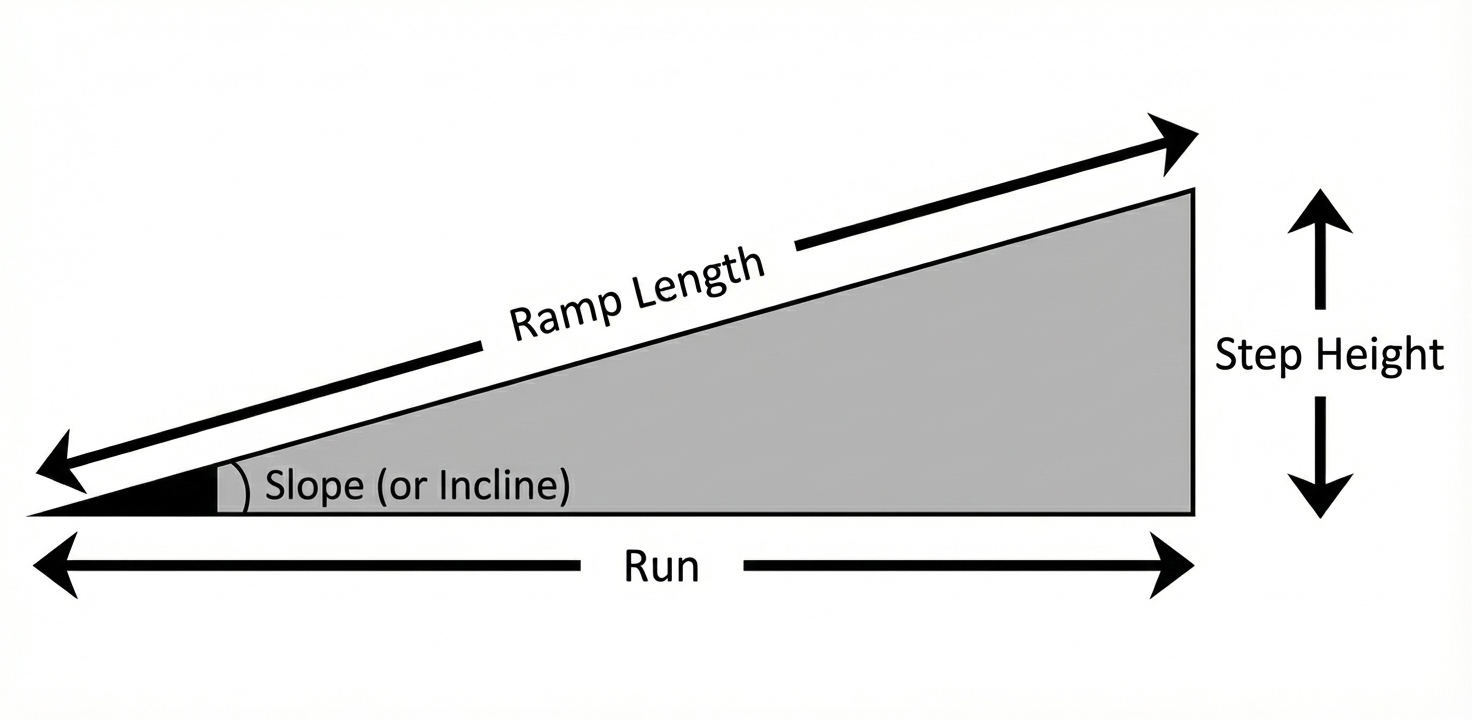
The ramp calculation formula is straightforward:
Ramp Length (Run) = Rise (Step Height) × Slope Ratio
Example: Step height = 6 inches, Slope ratio = 1:12
→ Ramp Length = 6 × 12 = 72 inches (6 ft)
This is exactly how a slope calculator for ramp works behind the scenes. If you want to know how to calculate ramp length manually, this is the formula to use.
Ramp Slope Calculation Formula
For angles, the ramp slope calculation formula is:
Angle = arctangent (Rise ÷ Run)
Lower angles mean easier pushing, less effort, and greater safety. For most wheelchair ramps, angles under 5 degrees are considered comfortable.
What Is a Slope Ratio? (Ramp Ratio Calculator Explained)
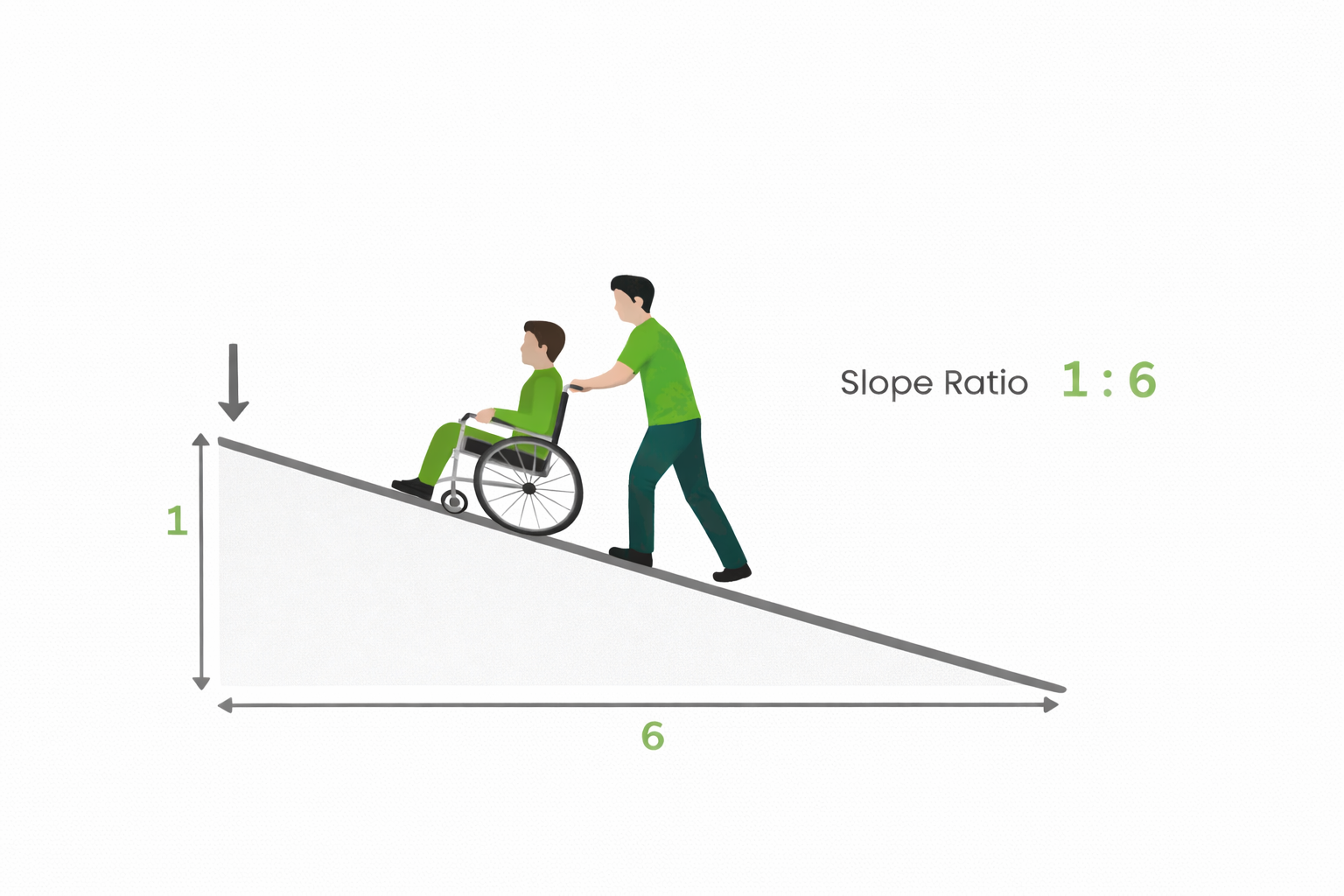
The slope ratio — also called the ramp slope ratio — is written as 1:X, where:
- 1 = vertical rise
- X = horizontal run (ramp length)
A larger X value means a gentler, safer ramp. A ramp ratio calculator or ramp slope ratio calculator helps you pick the right ratio instantly based on who will use the ramp.
Ramp Slope Ratios for Different Users
| User Type | Slope Ratio | Notes |
|---|---|---|
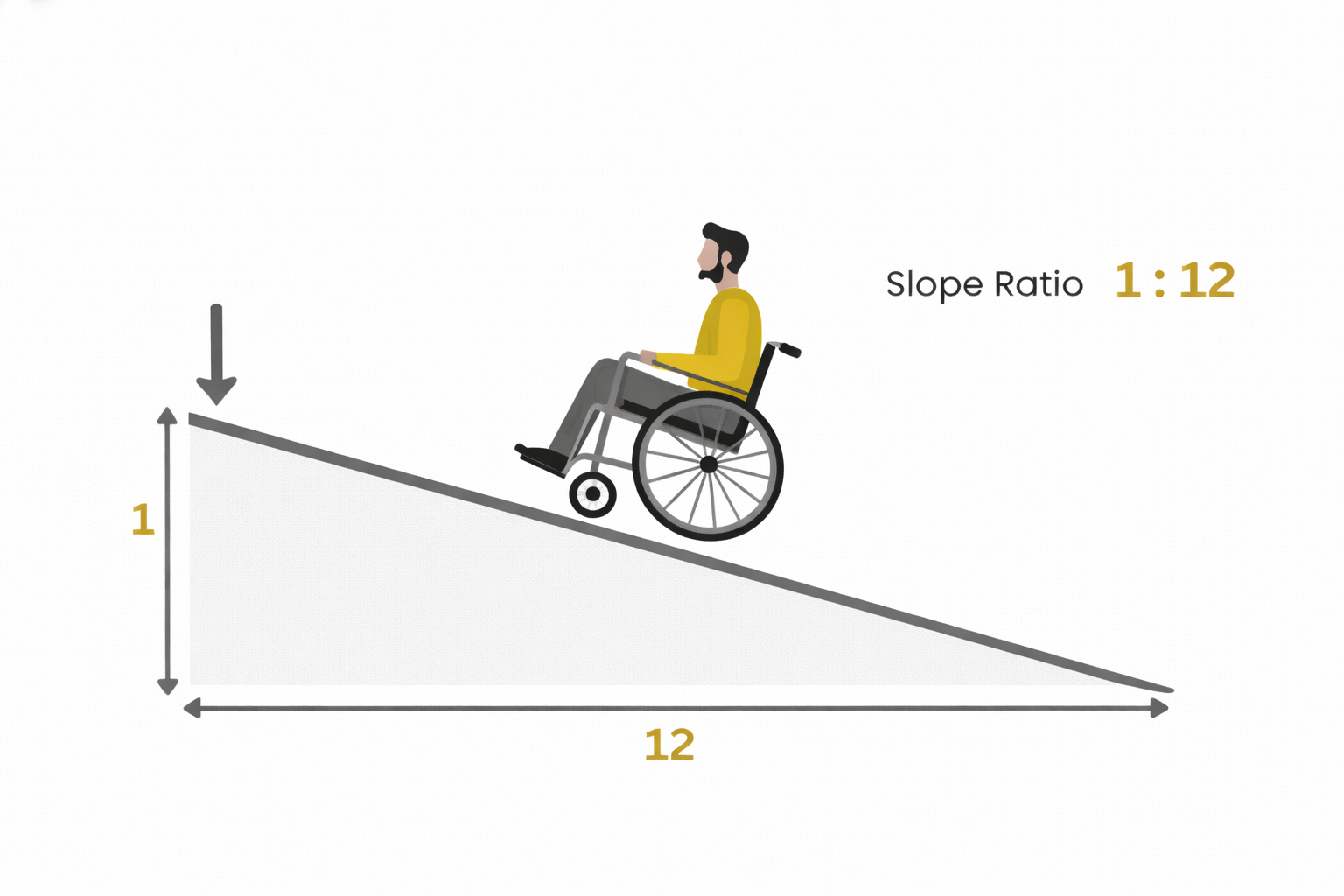
| Manual Wheelchair | 1:12 | ADA & CPWD standard; safest option |
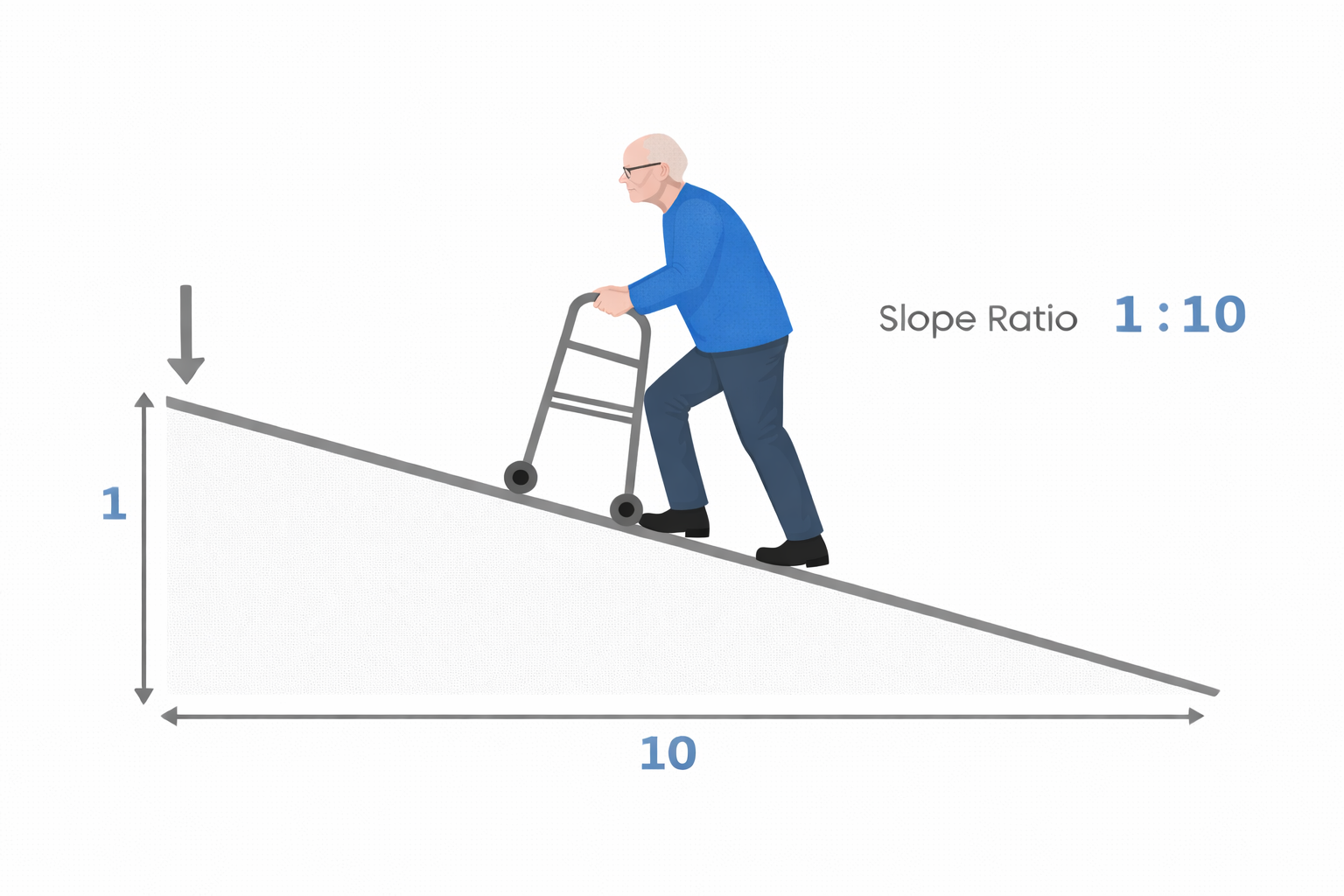
| Elderly / Walker | 1:10 | Suitable for short heights |
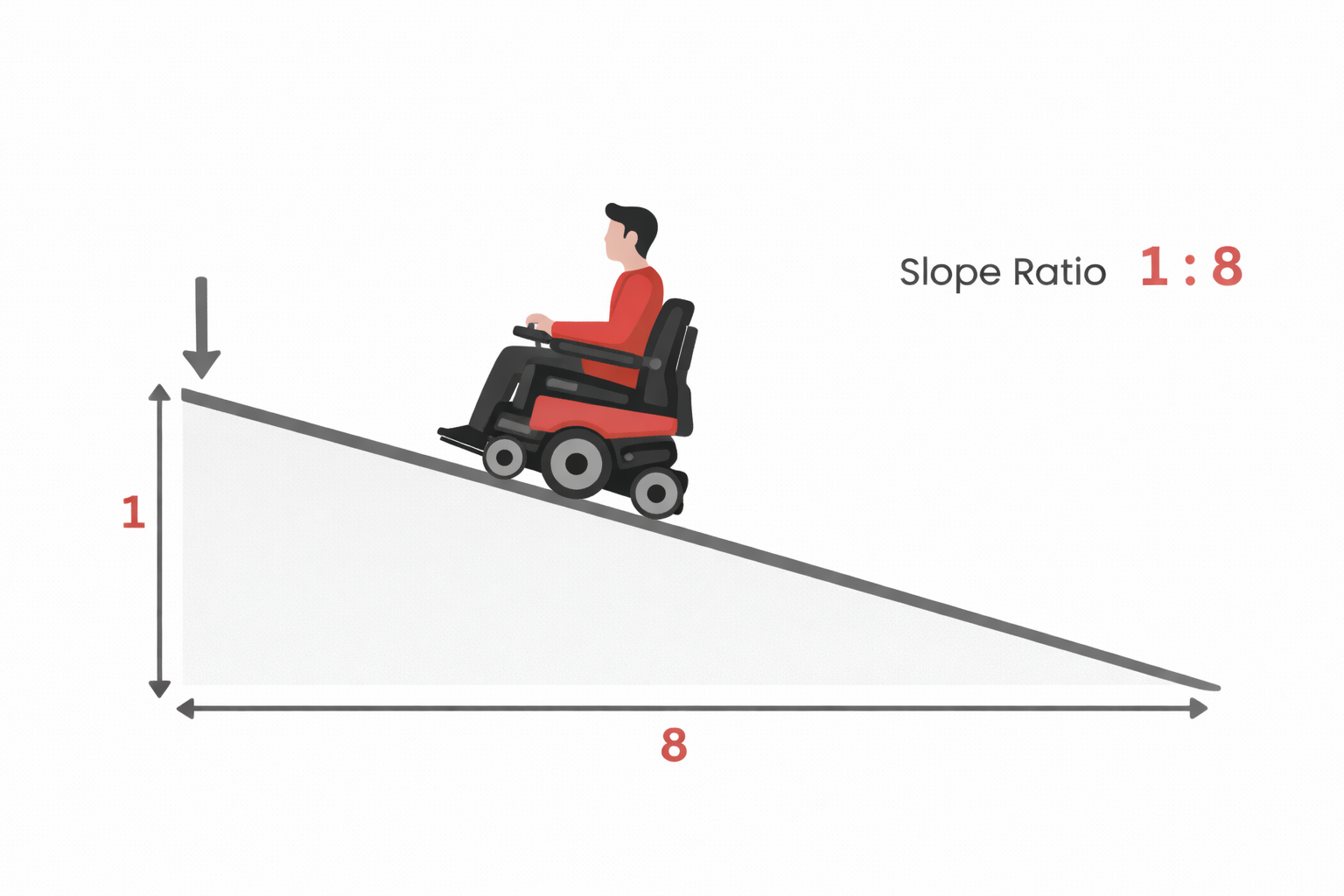
| Powered Wheelchair | 1:8 | Acceptable with good chair control |
| Caregiver Assisted | 1:6 | Only for very short rises with help |
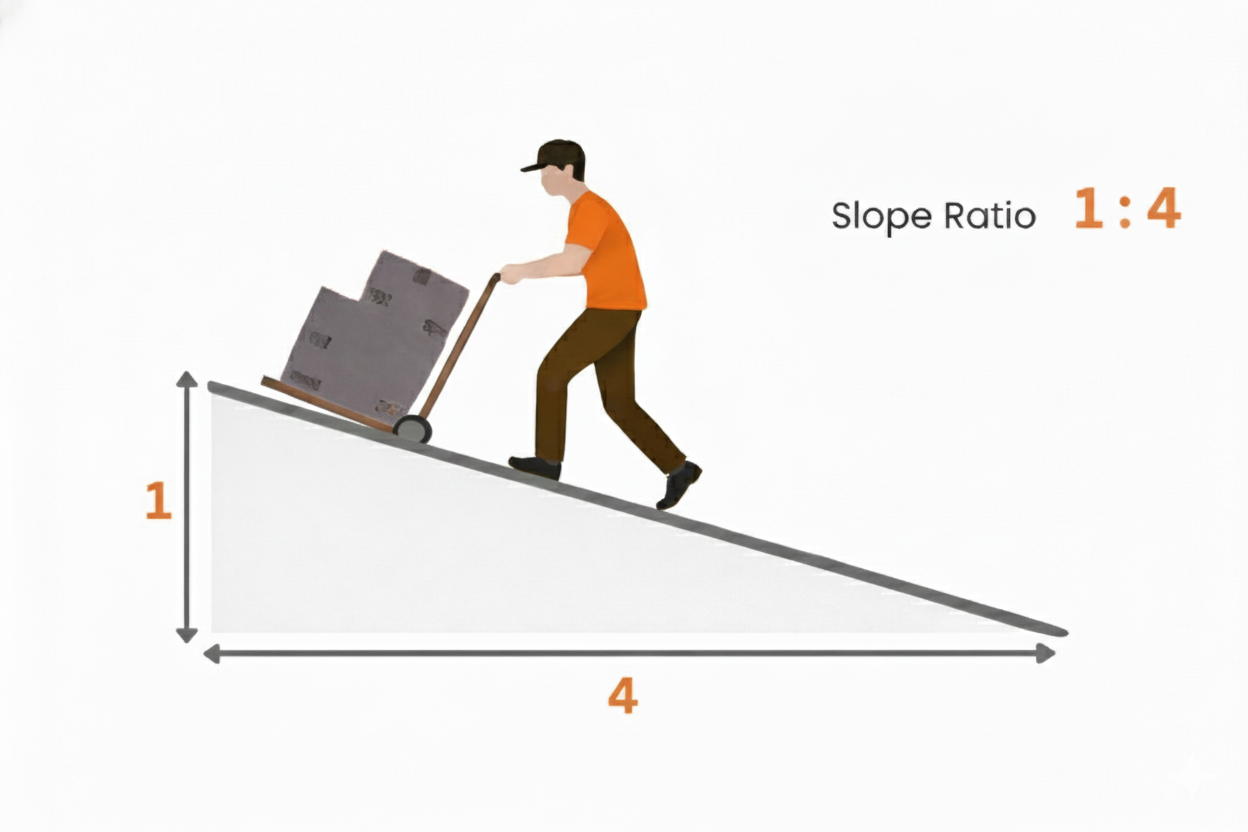
| Trolley / Vehicle | 1:4 | Not suitable for wheelchairs |
The wheelchair ramp slope calculator automatically applies a 1:12 ratio — the most widely accepted standard for accessibility. For vehicles, the car ramp slope calculator mode uses a steeper 1:4 ratio suited for loading equipment or driving up.
How to Calculate Slope Ratio
If you already know the rise and run, how to calculate slope ratio is simple:
Slope Ratio = Run ÷ Rise (expressed as 1:X)
Example: Rise = 4 inches, Run = 48 inches
→ Slope Ratio = 48 ÷ 4 = 1:12
Use the ramp slope ratio calculator on this page to verify this instantly without manual calculation.
How to Calculate Ramp Length (Manual Method)
If you prefer to calculate by hand, here is how to calculate ramp length:
- Measure the step height (rise) in inches
- Choose your slope ratio (e.g., 1:12 for a manual wheelchair)
- Multiply: Ramp Length = Rise × Ratio
Example: Rise = 5 inches, Ratio = 1:12
→ Ramp Length = 5 × 12 = 60 inches (5 ft)
The ramp length calculator tool on this page does this automatically and also converts the result into your preferred unit.
Accessibility Standards for Ramp Slopes
Using a ramp slope calculator helps you meet official guidelines with confidence:
- ADA (USA): 1:12 slope maximum; rest landings required for long ramps
- CPWD (India): 1:12 preferred; 1:10 where space is limited
- UK Building Standards: Typically 1:12 for public buildings
- WHO Guidelines: Gentle slopes recommended for universal access
Car Ramp Slope Calculator — What's Different?
A car ramp slope calculator is designed specifically for vehicle loading scenarios — driving a wheelchair, scooter, or equipment into a van or truck. Vehicle ramps typically use steeper ratios (1:4 to 1:6) and require calculating for the ground clearance of the vehicle, not just rise. Use the Trolley / Vehicle preset in the calculator above for this purpose.
Safety Tips for Ramp Design
- Use non-slip surfaces on all ramp sections
- Add side kerbs or edge protection to prevent rollovers
- Install handrails wherever possible
- Keep ramps dry, clear, and obstacle-free
- Check product weight limits — portable ramps are typically safest under 6 ft
Frequently Asked Questions
What is a ramp calculator?
A ramp calculator is a tool that uses your step height and a recommended slope ratio to instantly calculate ramp length and slope angle. It removes manual math and helps you size ramps safely for wheelchairs, seniors, and vehicles.
How do I use a ramp slope calculator?
Enter your step height (rise), select the user type or slope ratio, and click Calculate. The ramp slope calculator returns the ramp length, slope angle in degrees, and the ratio applied — so you know exactly how to calculate ramp slope for your situation.
What is the ramp calculation formula?
The ramp calculation formula is: Ramp Length = Rise × Slope Ratio. For example, a 6-inch rise at 1:12 gives 72 inches (6 ft) of ramp length. The ramp slope calculation formula for angle is: Angle = arctangent (Rise ÷ Run).
How to calculate ramp length for a wheelchair?
To learn how to calculate ramp length, multiply the step height by the slope ratio. For manual wheelchairs, use 1:12. A 4-inch step needs 48 inches (4 ft) of ramp. The wheelchair ramp slope calculator on this page applies the 1:12 standard automatically.
How to calculate slope ratio from rise and run?
To understand how to calculate slope ratio, divide the horizontal run by the vertical rise. If run is 60 inches and rise is 5 inches, the ratio is 60 ÷ 5 = 1:12. A ramp ratio calculator verifies this in one click.
What is the difference between a car ramp slope calculator and a wheelchair ramp?
A car ramp slope calculator uses steeper ratios (typically 1:4 to 1:6) for loading vehicles and equipment. A wheelchair ramp slope calculator uses gentler ratios (1:12 for manual chairs) for safe, independent access. Choose the correct preset in the calculator above based on your use case.
What slope ratio should I use for a home entrance?
For home entrances with manual wheelchairs, use 1:12 — the ADA and CPWD standard. For seniors with walkers, 1:10 may work for very short steps. The ramp slope ratio calculator lets you compare options side by side.
Conclusion
Whether you're planning a home entrance, a vehicle loading ramp, or an institutional access route, using a ramp calculator ensures you get the slope, length, and angle right the first time. This tool combines a ramp slope calculator, ramp length calculator, ramp ratio calculator, and wheelchair ramp slope calculator in one place — so you can calculate ramp slope, understand the ramp slope calculation formula, and choose the right product with complete confidence.